
How to Choose a Home Generator (6 Major Factors to Consider)
To choose a home generator, consider your backup power needs, the type of fuel you can supply, the noise levels you can tolerate, and your budget. You should also check what support is available for a brand before you select it. If you’re interested in remotely monitoring your generator, you have to look for units that have remote features, too.
Let’s explore these factors in detail and discuss popular brands for homeowners looking for backup power.
For professional opinion on the type of generator to get for your home or generator installation in Charlotte, NC, call (704) 804-3320.
Choose the Right Size Generator for your Home
Decide what generator size you need based on the appliances you want to run on standby power.
Getting the size right is essential because a generator that’s too big or too small causes problems. If you choose one that is too small, you risk forcing it to perform frequent load shedding, leading to overloads and sudden shutdowns. On the other hand, if you pick a generator that is too big, there will be fuel waste and carbon buildup on internal components because they are not being used as needed.
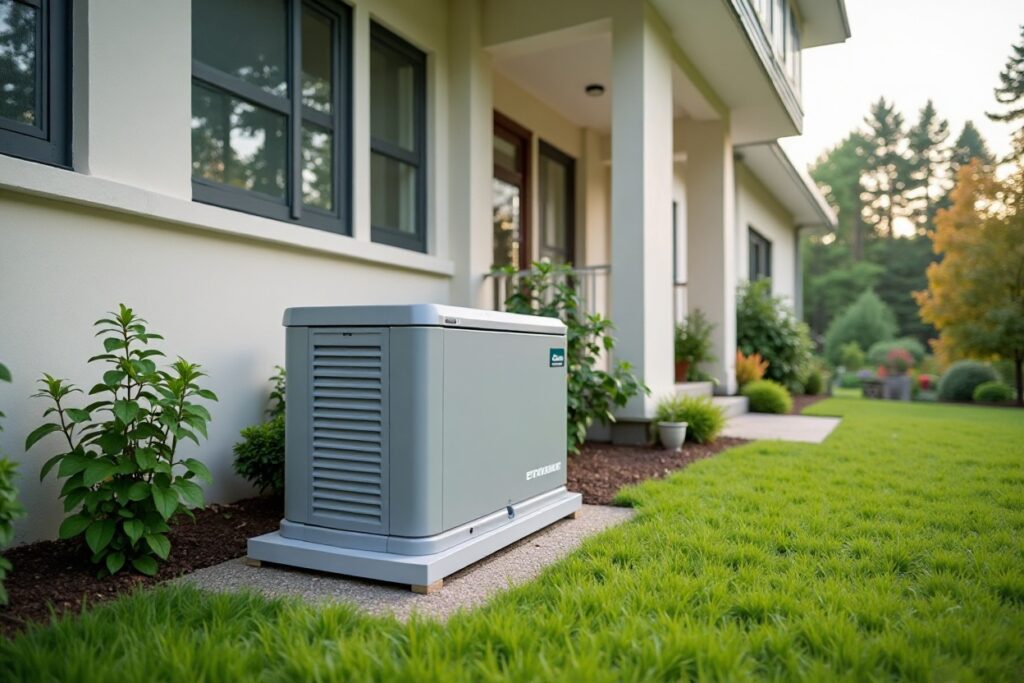
The ideal load range for a home generator is 40-80%, and for natural gas generators, 60-80%. Therefore, a 22kW NG generator should be carrying about 13kW to 17kW loads at any given time.
To find the right generator size, make a list of all the appliances you want to run on backup power. Add their wattage and divide by 1000 to get the kilowatts needed at that time.
For instance, if you want to power your refrigerator (800 watts), TV (200 watts), 10 light bulbs (200 watts), and a sump pump (1500 watts), the total is 2,700 watts. Divided by 1000, you get 2.7kW. Also, appliances have startup surges that are 2 to 3 times their wattage. Therefore, you need a portable NG gen with a capacity of 5.4kW to 8.1kW to start and run your appliances smoothly.
If you decide to power your whole house, including HVAC systems, you may need a unit rated up to 26kW.
Consider Fuel Type
Decide which home generator to buy based on fuel type, supply, and power efficiency.
Home generators run on diesel, natural gas, and liquid propane. If you’re a homeowner in Charlotte, North Carolina who already uses natural gas at home, an NG generator makes the most sense. You already have the supply and just need to hook up the lines.
However, gas burns too much fuel sometimes and doesn’t produce as much power as LP generators do. If you’re looking for greater efficiency and can afford to install and refuel tanks separately, LP will suit your needs.
Finally, although gasoline generators are fuel-efficient, you should be careful about carbon monoxide poisoning. Therefore, the placement of the generator and the direction of the exhaust are essential factors to consider.
Look up Noise Levels
If you live in a packed neighborhood, the noise levels of your generator are an essential factor to consider.
Some models are noisier than others. Still, you can get home generators with 20+ kW that have low noise levels in the mid-60s decibels. Also, some units come with sound mufflers and noise reduction systems. However, most importantly, placement will make the most difference in noise.
Consider Automations and Smart Features
These days, it has become an important step to check how modernized a home generator is. The more smart features it has, the better it can cater to modern power needs.
At the basic level, check if a generator supports automatic switchover. That is, whether the generator allows automatic transfer switch (ATS) installations that switch to the backup when there’s a power outage. Some residential models can switch from utility power to backup power in less than 10 seconds.
Many new generator units now support remote monitoring with phone apps. You can get alerts and even reminders for maintenance checks.
Check Available Warranty and Service Support
It’s essential to confirm whether the generator you’re considering has service dealers in your residential area. Some brands are more difficult to repair than others. Some offer more extended warranties than others. Also, if you run into component issues or need to service your generator, it should be easy to find an eligible dealer in your area.
You can ensure this by speaking to licensed electricians and generator installers in your area to find out what brands they can work on before you make a final decision.
Consider Your Budget
Finally, you cannot overlook the budget when choosing a new generator. Some brands offer more competitive upfront prices than others for similar power solutions and features. Look at the features you get, plus installation and maintenance costs.
Popular Home Generators to Consider
For North Carolina residents, there are popular standby generator brands with extensive support networks to choose from. Here they are, and what they do best.
Generac
Generac is a widely recognized brand known for its Guardian Series models, which deliver reliable whole-house backup power. These units support natural gas or propane fuel, offer remote monitoring features, and are backed by a large dealer and service network, making them a popular choice for residential backup power. Choose Generac if you want:
- Large service network
- Multiple remote and smart features
- Relatively quiet power
Briggs & Stratton
Briggs & Stratton produces reliable standby generators with solid wattage options (often around 12–26 kW). They also have user-friendly features, such as automatic start and fuel-efficient engines. Their PowerProtect model line is designed to run key household loads, and the brand is known for competitive pricing and easy maintenance. Choose Briggs & Stratton if you want:
- Commercial-grade power output at home
- Easy installation and maintenance
- Long warranty
Kohler
Kohler generators are known for premium build quality, quiet operation, and fast response times during outages. Their residential models offer NG and propane options, corrosion-resistant enclosures, and robust reliability. Choose Kohler if you’re interested in:
- Fast kick-ins during outages
- Quiet generators
- Long-term use
Cummins
Cummins’ QuietConnect and RS Series home standby generators focus on durability, quiet operation, and advanced diagnostics. The brand is known for rugged units that can handle frequent outages and provide stable power. Choose Cummins for:
- Efficient fuel use
- Fast power transfers
- Quiet operations
Let a Professional Install a Generator That Matches Your Power Needs
Choosing the right generator is not just about picking a size, brand, and fuel option. You also need to speak with a professional installer who deeply understands long-term reliability based on your home’s unique electrical needs.
At Ewing Electric Co, we provide experienced generator installers who will evaluate your power requirements and recommend the best solution that fits your budget. We have deep experience serving our local city of Charlotte and providing standby power options that also meet North Carolina requirements. From selection to professional whole-home generator installation, we make the process straightforward and stress-free.
Call us at (704) 804-3320 for a free consultation and estimate.
FAQs
Most 3-bedroom homes need a 10-20 kW standby generator, depending on appliance usage. If you decide to power up HVACs, get a 25000-watt generator for a whole-home backup power system.
A 1,200 sq ft home requires a 7-14 kW generator to run essential systems, including refrigerators, lighting, outlets, and even a small HVAC system.
A natural gas generator is better than propane or diesel if you already have access to a stable utility line. However, if you want better fuel efficiency, liquid propane is the better option.